
 Kanakunote ERP
 Parimaar CRM
 Pathiv Scheduling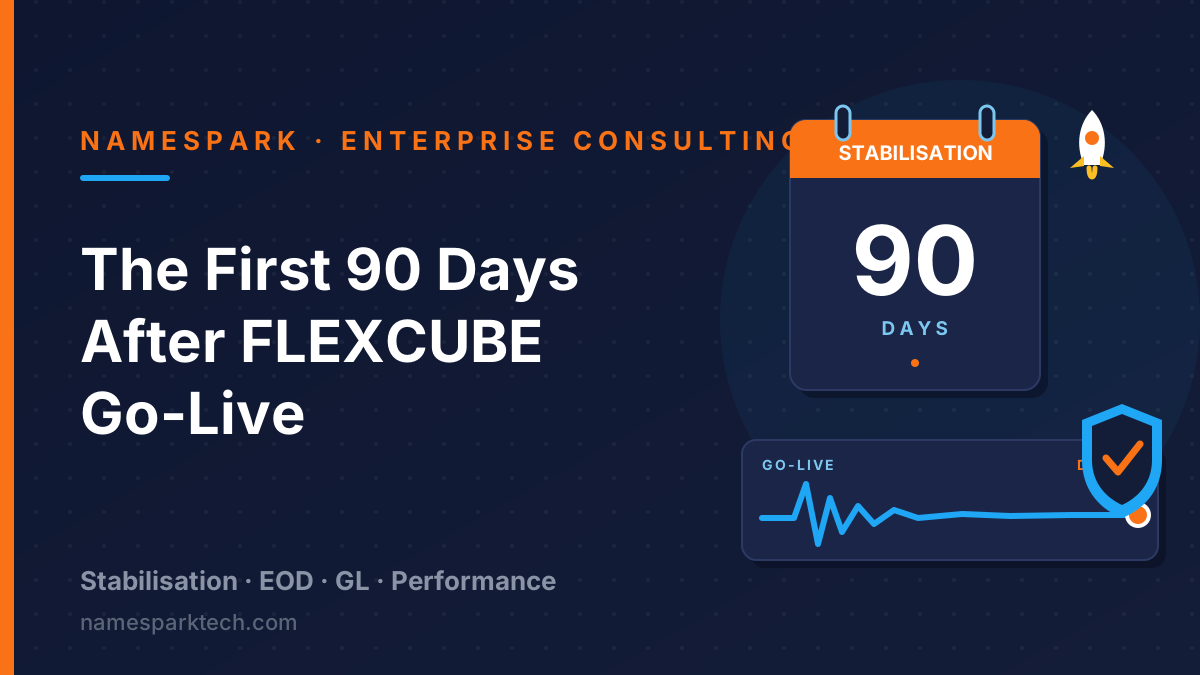
 By NameSpark
The First 90 Days After FLEXCUBE Go-Live: Why Stabilisation Is the Real Success Story
After months of planning, data migration, testing, training and cutover activities, your Oracle FLEXCUBE implementation finally goes live. Stakeholders celebrate, project teams breathe a sigh of relief, and the organisation looks forward to realising the benefits of its investment.
But experienced banking leaders know a crucial truth:
Go-live is not the finish line. It is the beginning of the most critical phase of the project.
The first 90 days after go-live often determine whether a FLEXCUBE implementation becomes a long-term success story or an ongoing operational challenge. This is the period when real customers, real transactions, real interfaces and real business volumes start interacting with the system — and challenges that were never visible during SIT, UAT or mock migrations suddenly emerge in production.
Why the First 90 Days Matter Most
Test environments can only simulate business operations to a point. Production brings what no UAT cycle can predict:
- Actual transaction volumes and peak business-day activity
- End-of-month processing and regulatory reporting cycles
- Concurrent user activity across branches and channels
- External channel integrations and real-world data patterns
The goal of the first 90 days should not simply be "keeping the system running." The goal is operational stability, financial accuracy, performance optimisation, integration reliability and user confidence.
The Six Challenges That Define Stabilisation
1. EOD & BOD Processing Issues
End-of-Day processing is the heartbeat of daily operations — a delayed or failed EOD creates a chain reaction across the bank.
- Batch jobs failing unexpectedly, long-running EOD
- Unprocessed transactions and validation failures
- Resource bottlenecks and job dependency failures
- Result: delayed branches, complaints, operational risk
2. GL Mismatches & Reconciliation
Small configuration gaps or migration exceptions strike at financial integrity itself.
- General Ledger mismatches, trial balance differences
- Suspense account growth and unreconciled balances
- Missing accounting entries, posting discrepancies
- Impacts reporting, audits and regulatory submissions
3. Integration & Interface Failures
FLEXCUBE talks to internet banking, mobile, ATM switches, payments, AML, treasury and CRM — and live traffic behaves nothing like test traffic.
- Lost transactions and duplicate messages
- Queue congestion, API failures, sync issues
- One interface issue can touch thousands of customers
4. Performance Under Real Volumes
Performance problems rarely show on day one — they emerge with salary runs, month-end spikes and bulk operations.
- Slow transactions, delayed inquiries
- Database contention, high CPU and memory
- Early tuning prevents larger disruption later
5. Housekeeping Nobody Planned For
Postponed during cutover, these become production problems.
- Pending migration exceptions causing failures
- Stale interface queues, obsolete configurations
- Unused products and parameters adding complexity
- Temporary migration users and roles still active
6. Configuration Gaps in Real Operations
Most post-go-live incidents trace to configuration, not software defects.
- Accounting roles, charges, interest discrepancies
- Holiday calendars, currency and branch parameters
- Authorisation workflows and role assignments
- Batch timing conflicts and interface scheduling
A Strong Stabilisation Framework — Five Pillars
1. Operational Monitoring
Proactive watch on transactions, EOD activities and exception reports.
2. Financial Reconciliation
Daily validation of accounting entries, GL balances and settlements.
3. Configuration Review
Periodic review of products, branches, parameters and security.
4. Integration Support
Interface health, message queues, APIs and external connectivity.
5. Performance Optimisation
Continuous infrastructure, database, middleware and app monitoring.
The Payoff
Fewer incidents, faster user adoption, protected credibility.
How NameSpark Helps After Go-Live
Many implementation partners focus on delivering migration objectives. Long-term success depends on what happens after production starts. NameSpark specialises in post-go-live Oracle FLEXCUBE support and stabilisation:
- EOD/BOD monitoring and recovery
- GL reconciliation support
- Housekeeping and system cleanup
- Product and configuration reviews
- Interface and integration troubleshooting
- Production incident management & RCA
- Performance tuning and optimisation
- Knowledge transfer and operational readiness
- Continuous stabilisation support
We help banks move from successful migration to successful operations.
The success of an Oracle FLEXCUBE implementation is not measured on go-live day. It is measured by how effectively the system performs in the weeks and months that follow — the 90 days where operational stability, financial accuracy, performance and user confidence are truly established.
Go-live is Day One. Stability is the real success story.